
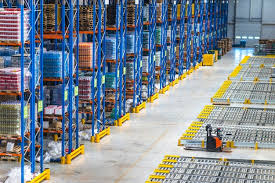
In the fast-paced commercial landscape of Hong Kong, where every square foot of warehouse space is a premium asset and delivery windows are shrinking by the minute, businesses are scrambling for a competitive edge. The buzzwords echoing through the industrial hubs of Kwun Tong, Tsing Yi, and Tuen Mun are no longer just about storage capacity; they are about automation. For Hong Kong logistics managers, supply chain directors, and e-commerce entrepreneurs, the integration of AMR (Autonomous Mobile Robots) and ASRS (Automated Storage and Retrieval Systems) has shifted from a futuristic luxury to an immediate necessity. If you are looking to slash operational costs, eliminate human error, and maximize vertical space, understanding the synergy between AMR and ASRS is the key to unlocking unprecedented efficiency.
The Space Crunch in Hong Kong: Why Automation is Non-Negotiable
Hong Kong’s warehousing environment is unique. With land scarcity driving rental prices to astronomical levels, traditional forklift-operated warehouses are bleeding money. This is where ASRS comes into play. An ASRS , or Automated Storage and Retrieval System, is designed specifically to utilize vertical height that human-operated machinery simply cannot reach. By implementing an ASRS , Hong Kong warehouse operators can effectively double or triple their storage density without expanding their physical footprint. However, an ASRS alone is just a static structure. To bring goods from the deep storage racks to the packing stations, you need mobility. That mobility is provided by AMR . The combination of AMR and ASRS creates a seamless ecosystem where high-density storage meets intelligent, flexible transport.
Demystifying AMR: The Intelligent Workforce
Let’s dive deeper into the role of AMR . Unlike traditional Automated Guided Vehicles (AGVs) that require magnetic tape or wires, an AMR uses advanced sensors, LiDAR, and AI-driven mapping to navigate autonomously. For a bustling Hong Kong warehouse dealing with multiple SKUs and high throughput, AMR units are a game-changer. Imagine a fleet of AMR units gliding silently through the aisles of a cold storage facility in the New Territories. These AMR units communicate with each other to avoid collisions, recalculate routes in real-time if a pallet is left in an aisle, and seamlessly transport goods from the receiving dock to the ASRS induction points. The beauty of AMR lies in its scalability. If your business experiences a surge during the Double Eleven shopping festival or the Lunar New Year sales, you can simply deploy more AMR units to handle the load without the hassle of recruiting and training temporary staff.
ASRS: The Vertical Powerhouse
While AMR handles the horizontal movement, ASRS dominates the vertical dimension. A modern ASRS is not just a racking system; it is a highly engineered machine comprised of stacker cranes, shuttles, and sophisticated warehouse control software. In a typical Hong Kong multi-story warehouse, implementing an ASRS allows operators to consolidate scattered inventory into a single, highly organized automated tower. The ASRS retrieves totes and pallets in seconds, a speed that no human operator can match. When an order is placed, the ASRS retrieves the goods and places them at a pick station. This is where AMR and ASRS converge beautifully. The ASRS outputs the goods, and an AMR arrives precisely at that moment to take the goods to the next stage—whether it is packing, labeling, or outbound shipping. This handshake between AMR and ASRS eliminates walking time, one of the biggest productivity killers in traditional warehouses.
Overcoming Labor Challenges with AMR and ASRS
Hong Kong is facing a significant labor shortage in the logistics sector. The physical demands of warehouse work, combined with the rise of gig economy opportunities, make retaining skilled forklift operators and pickers incredibly difficult. By investing in AMR and ASRS , businesses can pivot to a “goods-to-person” model. Instead of workers walking 20 kilometers a day through a warehouse, the ASRS brings the goods to a stationary workstation, and AMR moves the completed orders away. This drastically reduces the physical strain on employees. Furthermore, integrating AMR into this workflow means that the workforce can be redeployed to higher-value tasks, such as quality assurance or inventory management, rather than mundane transportation. The adoption of AMR and ASRS is not about replacing people; it is about augmenting the existing workforce to achieve higher output with lower injury rates.
Seamless Integration: Software and Connectivity
The magic of AMR and ASRS truly shines when they are connected through a robust Warehouse Management System (WMS) and Warehouse Control System (WCS). For Hong Kong logistics providers handling cross-border e-commerce, real-time visibility is crucial. When AMR units are integrated with the ASRS , every movement is tracked. You know exactly when the ASRS picks an item, which AMR is carrying it, and the estimated time of arrival at the dispatch zone. This level of traceability, powered by the synergy of AMR and ASRS , provides the data analytics needed to predict bottlenecks. If the ASRS throughput is high but the outbound AMR fleet is underutilized, the system automatically alerts managers to rebalance the workflow. This holistic integration ensures that the investment in AMR and ASRS yields a rapid return on investment (ROI) by maximizing asset utilization.
Case Study Scenario: E-commerce Fulfillment in Hong Kong
Consider a mid-sized e-commerce company operating out of a 10,000-square-foot facility in Shatin. Before automation, they struggled with chaotic storage and high labor costs. After implementing a mini-load ASRS for small parts and a fleet of AMR for carton transport, their operations transformed. The ASRS now holds thousands of SKUs in a compact footprint, delivering items to picking stations with pinpoint accuracy. Meanwhile, AMR units autonomously deliver empty cartons to the packing stations and transport finished parcels to the consolidation area. The client reported a 50% reduction in labor costs associated with material handling and a 70% increase in order accuracy. The flexibility of AMR allowed them to reconfigure their workflow overnight without moving heavy conveyors, while the ASRS provided the structural backbone for inventory organization. For this business, AMR and ASRS became the twin pillars of their growth strategy.